Facebook
 X
X
 Pinterest
 Copy Link
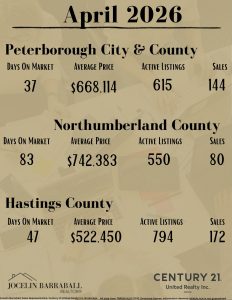
April 2026 Real Estate Update

April 2026 Real Estate Update
With spring now in full swing, April is often one of the most active months in the real estate market. Warmer weather, longer days, and increased buyer confidence – that encourage more people to begin their home search or list their property for sale. As a result, April provides valuable insight into the strength and direction of the spring market.
In this April 2026 Real Estate Market Update, we’ll review the latest statistics, including sales activity, average sale prices. And new listings, and inventory levels across the region. These numbers help paint a picture of current market conditions and can provide useful information. For buyers, sellers, and homeowners alike. Whether you’re planning a move this year or simply keeping an eye on the market, staying informed is an important part of making confident real estate decisions. Let’s take a look at how the market performed throughout April in Peterborough, Hastings, and Northumberland.
Check out another post! Waterfront Property Maintenance
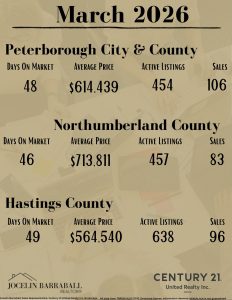
March 2026 Real Estate Update

March 2026 Real Estate Update
As winter begins to fade and spring approaches, the real estate market often starts to gain momentum. March is an important month, as it can provide an early indication of what buyers and sellers can expect during the busy spring market. With more homes coming onto the market and increased buyer activity. This time of year often brings new opportunities for those looking to make a move.
In this March 2026 Real Estate Market Update, we’ll take a closer look at the latest statistics, including sales activity, average sale prices, and inventory levels. And market trends across the region. Whether you’re considering buying, selling, or simply staying informed, understanding current market conditions can help you make confident real estate decisions. Let’s dive into the numbers and see what March had to offer in Peterborough, Hastings and Northumberland.
Check out another post! “Hidden” Costs Of Buying a Home
Summer Guide to Trent Hills

Your Summer Guide to Trent Hills
Summer is one of the best times to explore everything Trent Hills has to offer. From scenic trails and waterfront adventures to delicious local restaurants and refreshing ice cream stops, there is something for everyone to enjoy. Whether you’re a long-time resident, a new neighbour, or just visiting the area, summer is the perfect season to get out and experience the charm of our communities.
In this Summer Guide to Trent Hills, you’ll find some of our favourite outdoor activities, local spots to grab a bite to eat or cool off with a sweet treat, and exciting events happening throughout the season. So, gather your family and friends, make the most of the warm weather, and discover why Trent Hills is such a wonderful place to spend your summer. Let’s explore all the fun, food, and festivities that make this community shine during the sunny months ahead!






For more information on “Hidden” Costs Of Buying a Home click the link!
How I Saved For My First Home

How I saved for my first home!
When I was around 20 years old, I had (and still do have) a wonderful person in my life who I can proudly call my mentor. One thing that she gently pushed me to do was set up my finances with a financial planner who is amazing. Alana Burton set up an FHSA (first Home Saving Account) and a TFSA for me, and she took money automatically per month to go directly to both accounts. Doing this helped build up my FHSA for a few years, all the way until I was able to take the money out. I had money available for other closing costs like lawyer fees, moving expenses, paint, etc.
The next thing I did was reach out to a trusted mortgage broker, Laframboise Mortgages. Reaching out to a mortgage broker while you are getting closer to being able to buy a house is really helpful because they will tell you exactly how much more you need to save, and what steps you can take to be prepared to purchase. In my case, I was close to paying off my car payment, so I did, and that eliminated another monthly expense. Another thing a mortgage broker might suggest is to lower the amount on your credit cards and other payments if it is feasible for your situation.
Being in the Real Estate industry since I was 18 played a part in my being able to guide myself and my partner and align us with the professionals who I know can support first-time home buyers, upsizers, and downsizers. If you are thinking about purchasing your first home, I would absolutely recommend starting an FHSA – no matter how far away from purchasing. It’s something you can do yourself, or with help, as I did. That is how I saved for my first home!
If you are looking for a mortgage broker or help organizing your finances, these are the ladies I personally used!
Laframboise Mortgages – https://www.laframboisemortgage.ca/
Alana Burton – https://www.facebook.com/AdvisorAlana.Burton/
Check out this blog post! Market Education – First Time Home Buyer
“Hidden” Costs Of Buying a Home

‘Hidden’ Costs of buying a home.
When you purchase a new home, you are mostly thinking about your new mortgage and the down payment money. While also worrying about getting your conditions fulfilled. What you haven’t had time to think of is other costs that might not be so obvious, but you still need to budget and prepare for.
Closing Costs – Be prepared for the unexpected costs before closing – your lawyer will most likely need to be paid before closing. And prepaid taxes, title insurance, and other adjustments can all be more. Be sure you are planning for it.
Moving Supplies – When you start to think about packing, and you look at all your stuff, you might think, “I’m gonna need a lot of supplies for this.” From boxes, tape, and bubble wrap to the moving company. Don’t underestimate the expenses needed to actually move.
Land Transfer Tax* – can become forgotten about until you meet with your lawyers, and the number makes your eyes pop out of your head!
You can get a rough estimate of the land transfer tax based on the purchase price of your property. First-time home buyers may be eligible for a rebate.
Utility Hookups – Before you move into your new home, you have to set up your utilities. It may be required of you to pay a hookup fee to get your new utilities started.
Even though these costs aren’t actually ‘hidden’, they certainly are things that you might not think about until it is too late. So, now you can prepare yourself for the “hidden” costs of buying a home!
- Read more on the Land Transfer Tax here – Real Estate Terms Part One
February 2026 Real Estate Update

Time for your February 2026 Real Estate Update!
As we move further into 2026, February offers a clearer picture of how the real estate market is shaping up for the year ahead. While the start of the year is often quieter due to winter weather and the post-holiday slowdown, February trends can provide helpful insights. From buyer confidence to inventory levels, and overall market momentum. As the spring continues, I anticipate seeing an increase in sales activity in March. So follow along for the next update.
During the early months of the year, many buyers begin preparing for their home search. While sellers start considering whether it’s the right time to list their properties. As a result, February often acts as a transition period between the slower winter market and the more active spring season. New listings may begin to appear, giving buyers more options – while serious buyers who remained active through the winter continue to monitor opportunities.
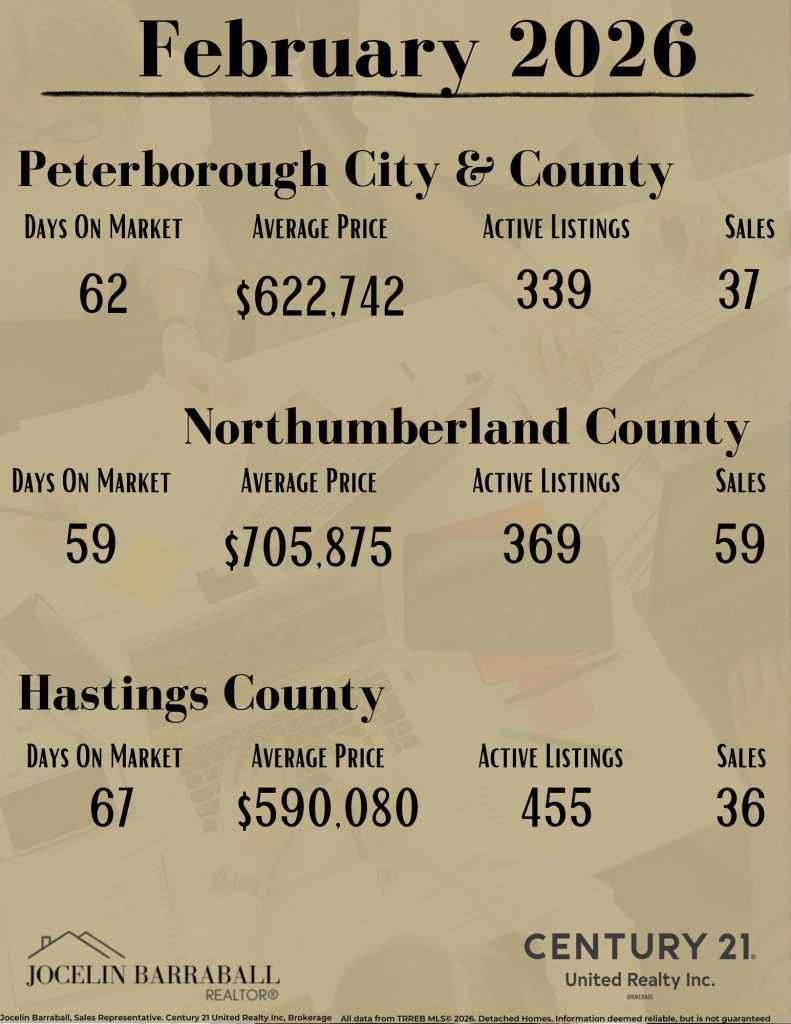
February 2026 Real Estate Update
First-time home buyer? Check this blog post out to get educated. Market Education – First Time Home Buyer
Real Estate Terms Part One

Buying or selling a home can feel overwhelming—especially when real estate conversations start sounding like a whole new language. From listings and offers to conditions and closing dates, industry terms get used quickly and often without much explanation. That’s why understanding the words is so important when navigating the real estate market.
In Real Estate Terms: Part One, we’re breaking down some common real estate words and phrases you’re likely to hear during the buying or selling process. Whether you’re a first-time buyer, a seasoned homeowner, or just starting to explore your options, hopefully these definitions help you along the way!
Easement: A legal interest in a property owned by another person or company for a specific, limited purpose. For example, a public utility company may have an easement that lets them pass through a property.
Freehold: A form of homeownership where the homeowner buys the right to have full and exclusive ownership of a home and the land that it sits on for an indefinite period.
Land Transfer Tax: A tax charged by many provinces and municipalities (usually a percentage of the purchase price) that the buyer must pay upon closing. *First-time home buyers in Ontario can be exempt or eligible for a refund of up to $4,000 on Land Transfer Tax.
Counteroffer: An offer made by the seller of a home after rejecting an offer made by a potential buyer. The counteroffer usually changes something from the original offer, such as the price or closing date.
Leasehold: A form of homeownership where the homeowner buys the right to have full and exclusive ownership of a home and the land that it sits on for a definite period.
Title Insurance: Insurance against losses or damages that could occur because of anything that affects the title to a property. For example, a defect in the title or any liens, encumbrances or servitudes registered against the legal title to a home.

*Info from the Government of Ontario Click Here To Learn More
Unless stated otherwise, all definitions are taken from Homebuying Step By Step Guide – Your Guide to Buying a Home in Canada, by Canadian Mortgage and Housing Corporation. Revised 2017
Check Out Another Post! When is the Time Right?
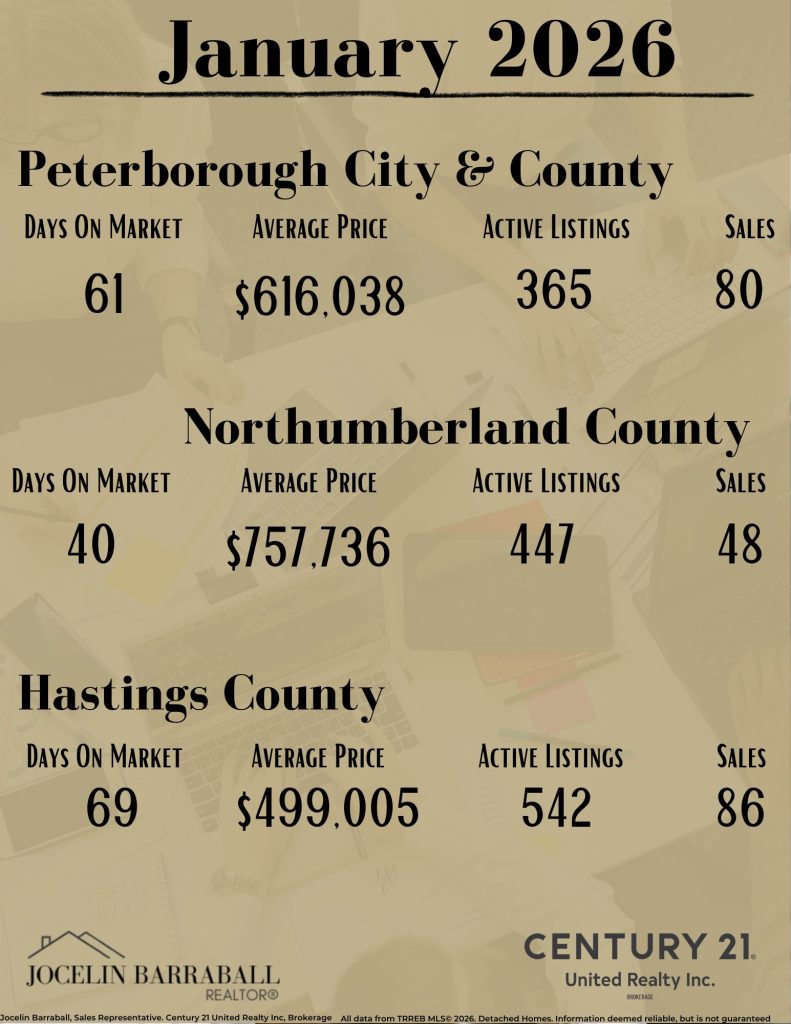
January 2026 Real Estate Update

January 2026 Real Estate Update
Here's to the New Year! January is the month when the real estate market slowly wakes up after the holiday season. While activity typically starts the year at a quieter pace, January provides valuable insight into buyer and seller behaviour and helps set expectations for the months ahead. It’s a great time to look at how the market is performing and what trends may be shaping the year to come.
As we wait for the business of the spring market to arrive, we can reflect on the January numbers. This will allow us to prepare for what's to come with the current numbers.
January 2026 Real Estate Update:
Check out a blog post here! Market Education – First Time Home Buyer










What’s The Difference Between The Deposit and Down Payment?

What's The Difference Between The Deposit and Down Payment?
If you are new to the home-buying world, you may have heard the terms deposit and down payment mentioned a time or two. But did you understand the difference? When I bought my first home, it took me a minute to realize what the difference was. Hopefully, I can help you before you get too far into the home-buying process!
What is the Deposit?
The Deposit funds are what you provide with your offer to purchase. These funds are held in trust by the listing real estate brokerage and are later credited toward the total Down Payment at closing.
EX. $10,000 Deposit Amount + $20,000 In Savings = $30,000 Down Payment Amount
What is the Down Payment?
The Down Payment is the money you are putting towards the purchase. The mortgage makes up the rest of the funds required to purchase a property. These funds would be due at closing and are provided to your lawyer.
EX. $500,000 Purchase price - $30,000 Down payment = $470,000 Mortgage Amount
For more information on mortgages and down payments, check out the ladies at Laframboise Mortgages https://www.laframboisemortgage.ca/


Check Out Another Post Market Education – First Time Home Buyer
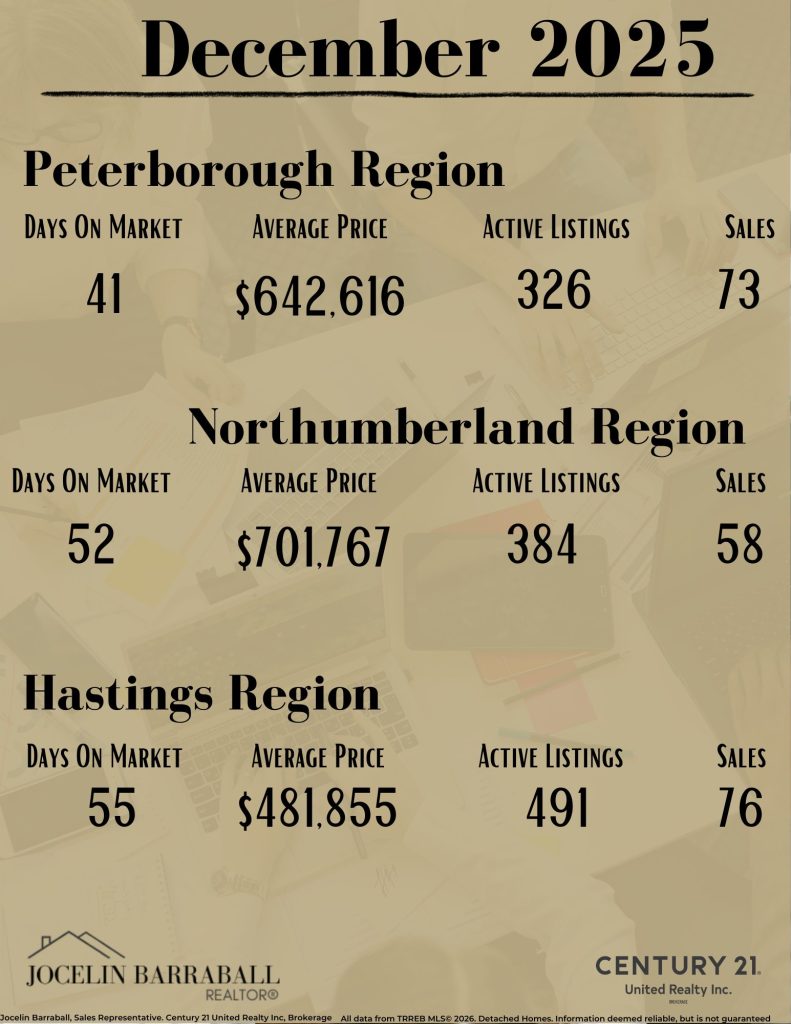
December 2025 Real Estate Update

December 2025 Real Estate Update! Time for what I think are the most boring stats of the year! While the numbers may not be the most exciting to look at, they do tell an important story. These stats clearly show that people took time to slow down, celebrate the holidays, and enjoy time with family and friends rather than focus on buying or selling. As a result, market activity typically dips during this season, which is completely normal.
Now that the holidays are behind us, we can start to anticipate the market coming back to life in the new year. Buyers and sellers are refreshed, motivated, and ready to make plans for the months ahead. With renewed energy and changing market conditions, we often see increased activity and new opportunities emerge. The quieter holiday period sets the stage for a more active and engaging real estate market as we move forward into the new year.
December 2025 Real Estate Market Update:
Check out a blog post! What’s The Difference Between The Deposit and Down Payment?